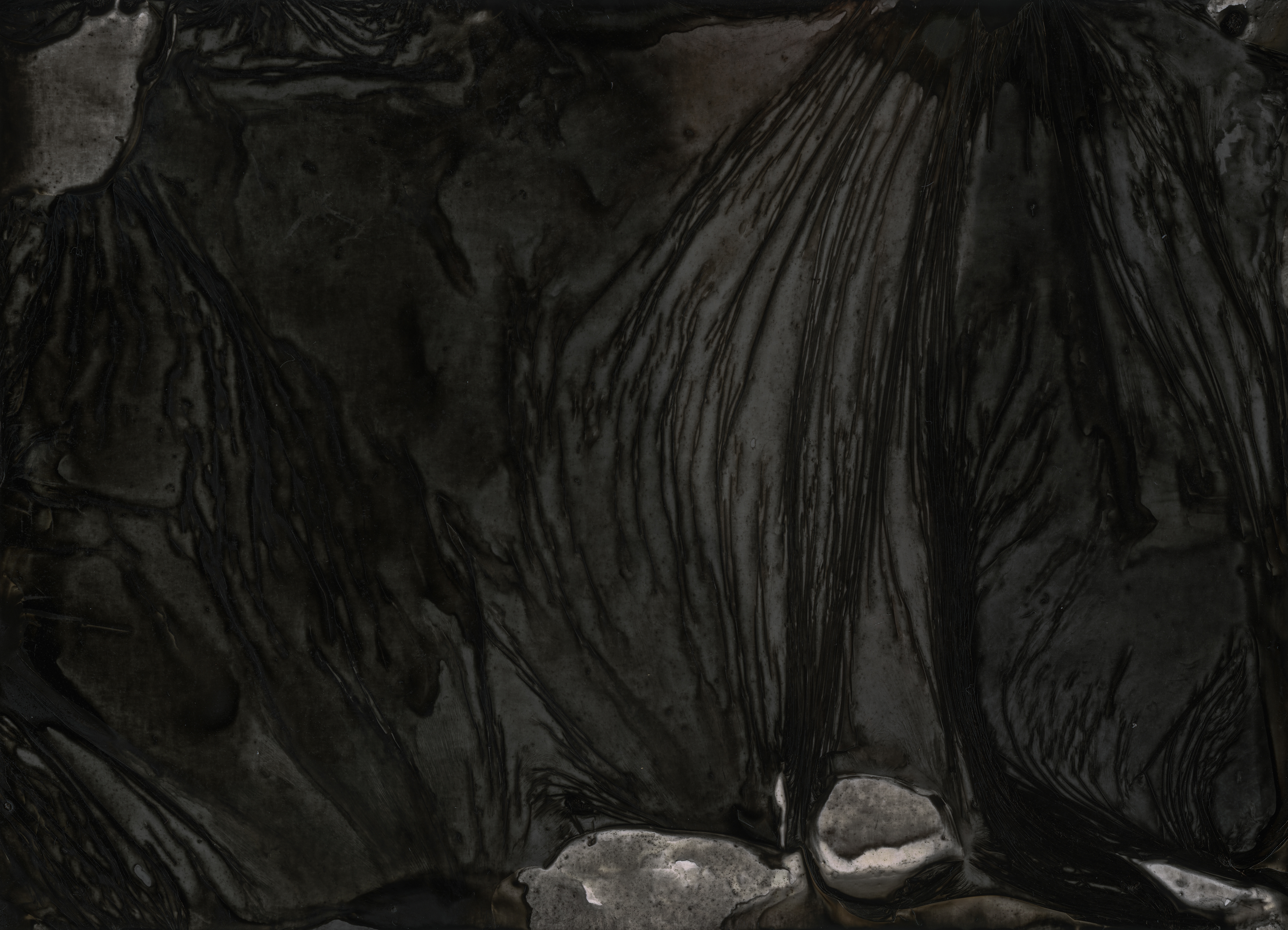
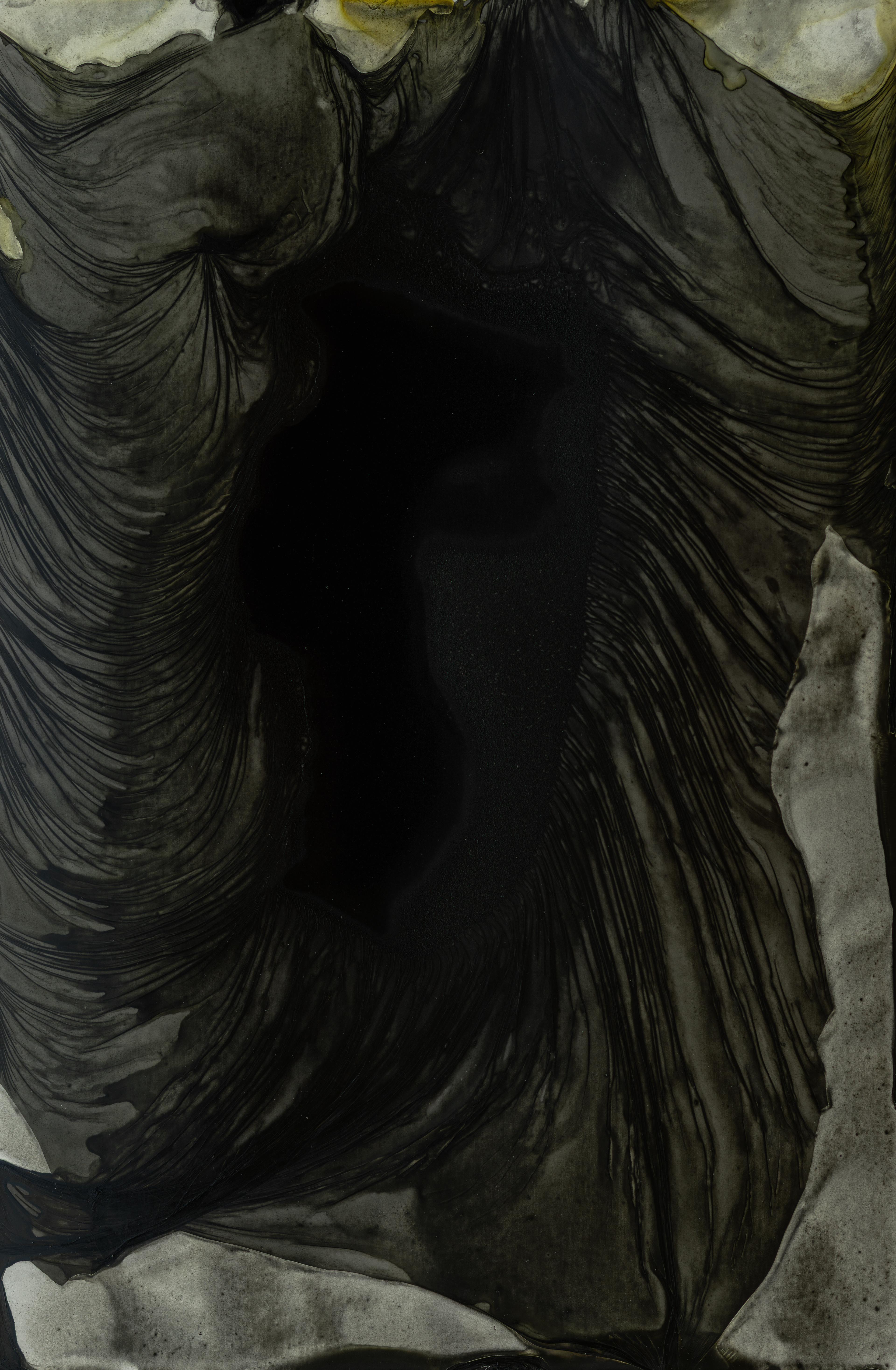
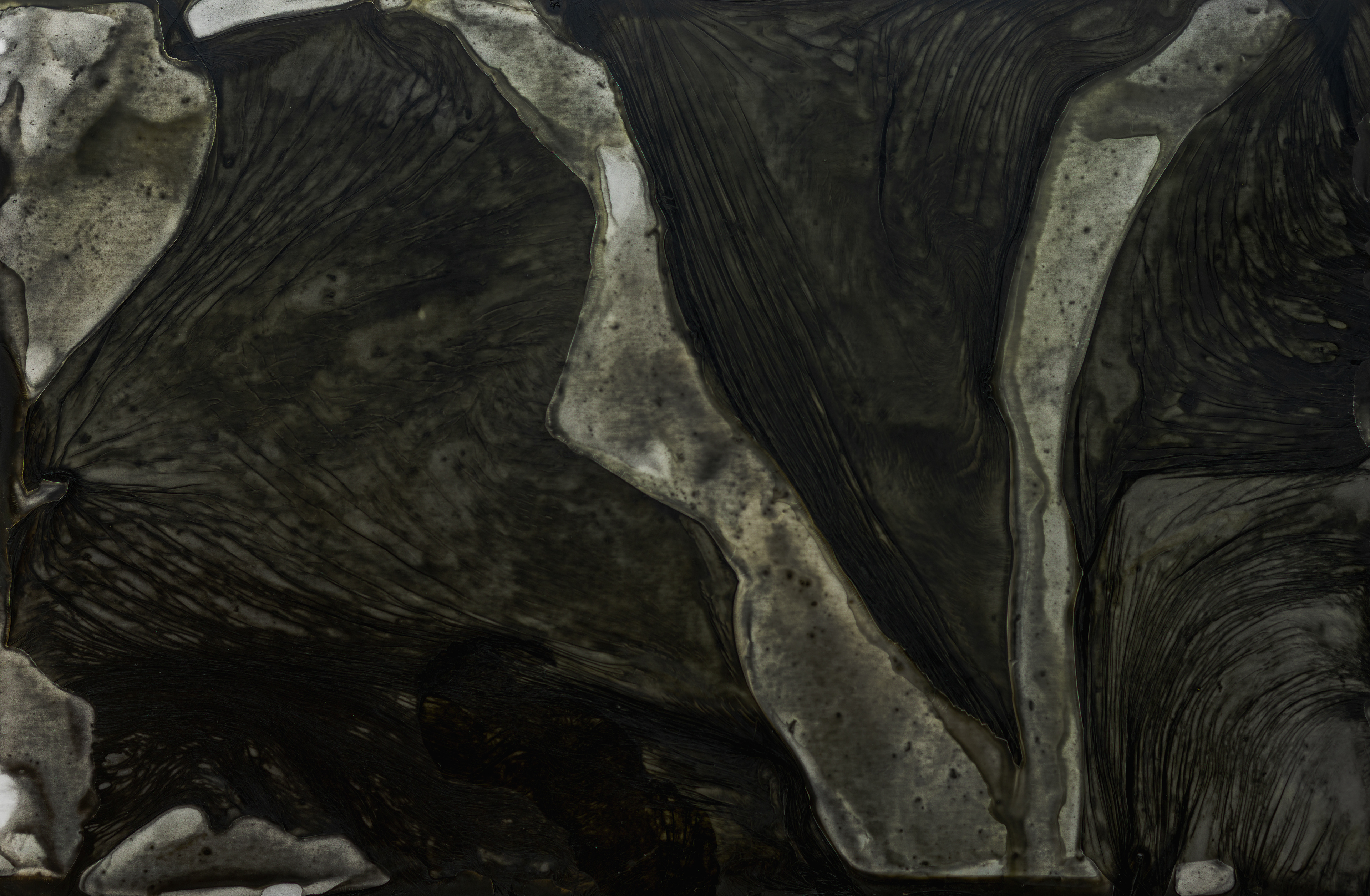
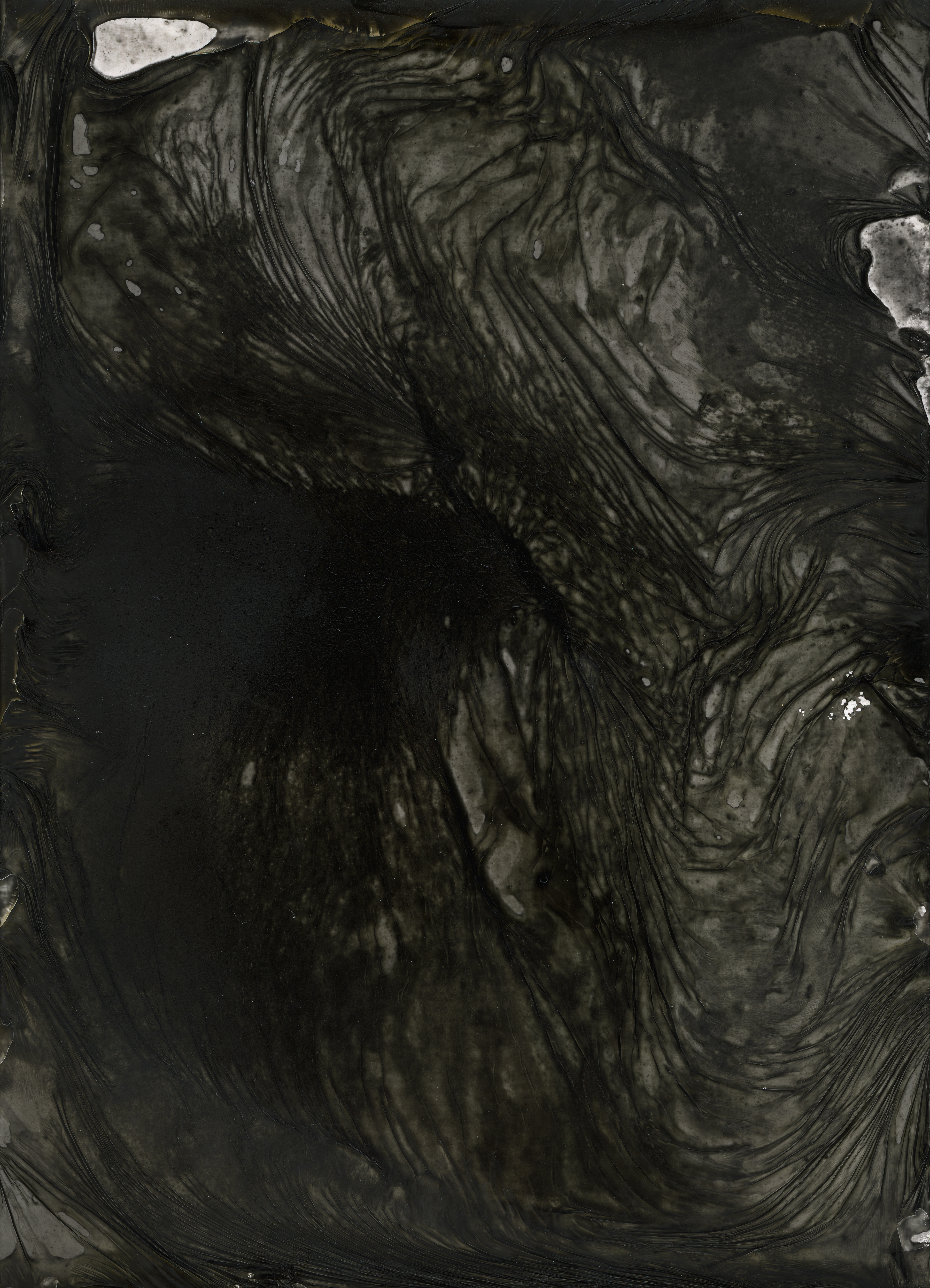
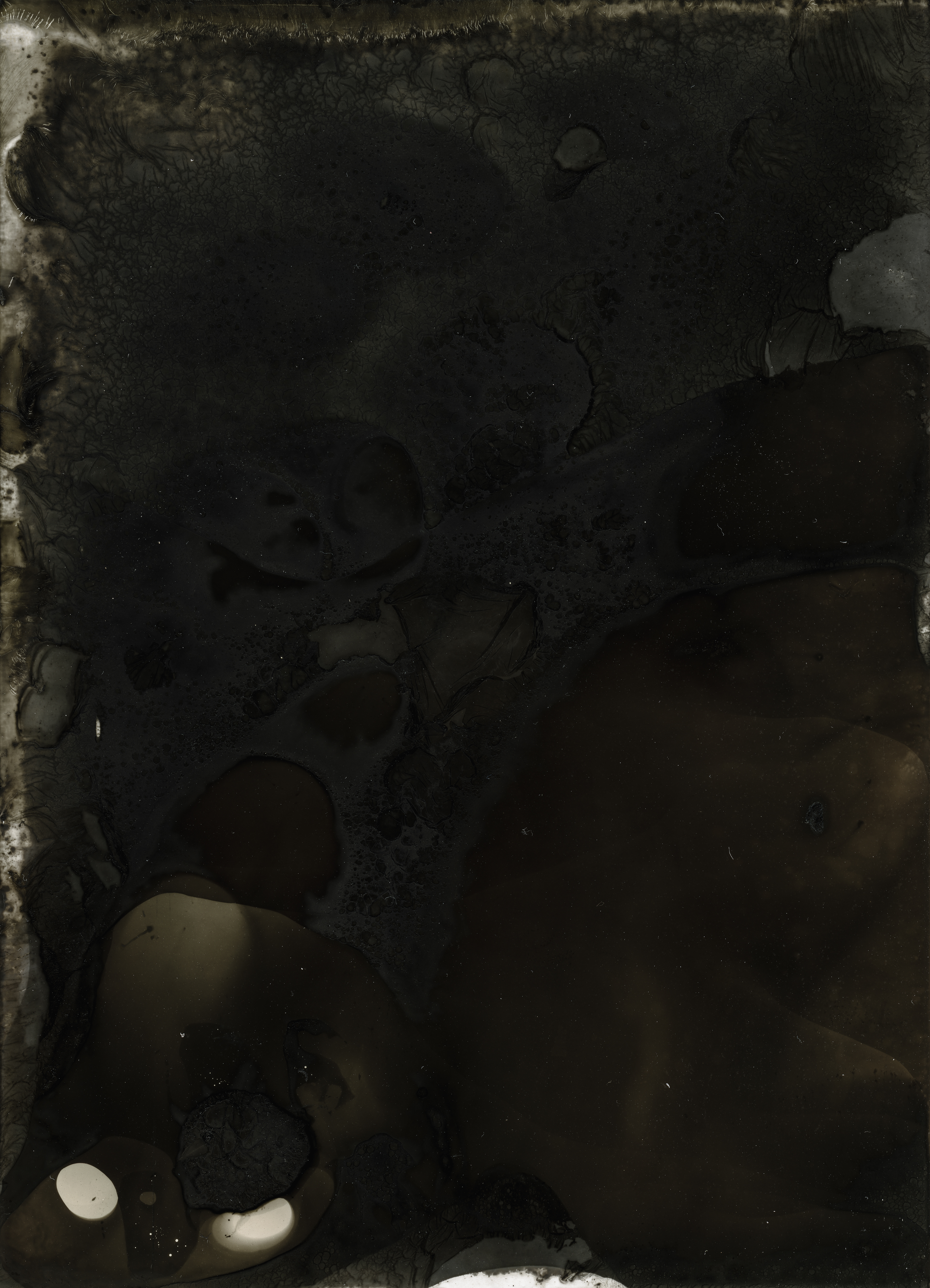
Tame Gloom explores the abstract image as a space of indeterminacy, in which the boundaries between form and its dissolution, presence and absence, light and darkness are continuously questioned. Freed from the need to represent a recognizable scene, photography becomes an autonomous visual field, whose content emerges through relationships between tones, textures, shapes, and voids.
The works are created through mordançage, a chemical intervention applied to an already developed black-and-white photograph. During this process, the photographic emulsion is chemically eroded, separates from its support, and forms new structures. The original photographic record gradually loses its representational function, while its material remnants become elements of a new, abstract composition. Photography thus moves away from its documentary nature and establishes itself as an independent visual reality.
Abstraction here does not emerge as a simplification of the visible world, but rather as a departure from recognizability. Forms do not refer to clearly defined objects or spaces, but remain open to different perceptual interpretations. Their indeterminacy allows the image to be experienced simultaneously as surface and depth, as a material trace and an illusion of space.
In this sense, the work can be considered in relation to the phenomenology of perception developed by Maurice Merleau-Ponty, according to which perception is not simply the registration of pre-existing objects, but an active relationship between the observer and the visible world. The absence of a clearly defined subject does not imply an absence of content; instead, it opens up a space in which the gaze attempts to establish relationships, recognize structures, and construct meaning. The image is not exhausted by what it depicts, but also takes shape through the very act of looking.
The title Tame Gloom itself introduces a paradox between tameness and darkness. What initially appears opaque, unfamiliar, or unsettling simultaneously acquires a sense of intimacy and tranquility. Tameness does not imply complete mastery over the unknown, but rather the possibility of accepting it without the need to fully clarify or define it.
Tame Gloom thus establishes a space between the material presence of photography and its visual indeterminacy. Rather than directing the gaze toward the recognition of a particular scene, the work holds it within the image itself, among relationships that resist definitive interpretation. Abstraction here is not an absence of meaning, but the possibility of its continuous emergence.
Mordançage on black-and-white photographic paper, various dimensions.
References:
Maurice Merleau-Ponty, Phenomenology of Perception (Phénoménologie de la perception, 1945).
Maurice Merleau-Ponty, Eye and Mind (L'Œil et l'Esprit, 1961).